Birthday T-shirt Design 19: An Embroidery Review
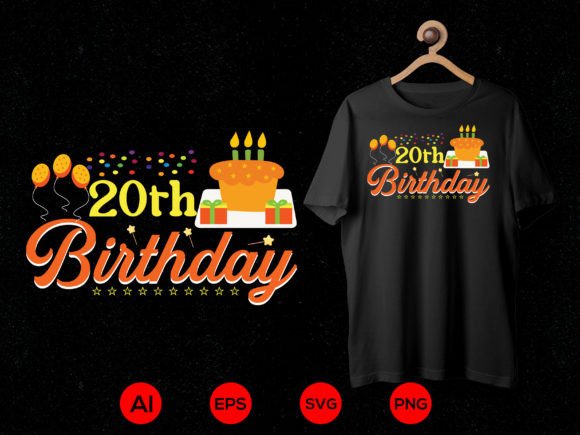
When I first opened Birthday T-shirt Design 19, I was looking for a clean birthday graphic that could hold up to stitching without losing its personality. This design centers on a 20th birthday theme with a straightforward, readable layout that feels modern without being trendy. The vector shapes are well-defined, and the overall composition has enough breathing room to translate well into embroidery. As someone who has tested countless digital embroidery files for real client projects, I appreciate when a design does not try to do too much. This one knows its purpose: to celebrate a milestone birthday with clear, wearable style.
The mood here is celebratory but not childish. It lands right where a 20th birthday should feel. It is young, confident, and clean. The lettering and graphic elements are balanced in a way that works for t-shirts, sweatshirts, and tote bags. If you are an Etsy seller or small shop owner looking for a birthday design that appeals to a young adult audience, this file gives you a solid foundation. It is not overly detailed, which is exactly what you want when you are planning to stitch it onto fabric and sell the finished product.
First Impressions for Embroidery and Apparel Use
Looking at Birthday T-shirt Design 19 from a stitcher's perspective, the vector shapes are clean and the lines are smooth. The file comes in AI, EPS, PNG, and SVG formats, which means you can open it in just about any design software and adjust it before converting to an embroidery file. The description says 100 percent print ready and 100 vector shapes resizable. That is accurate. You can scale this design up or down without losing quality. For embroidery, that gives you flexibility. You can size it for a youth small t-shirt or an adult 3XL hoodie just by adjusting the vector file before digitizing.
The color change is easy. That matters more than most buyers realize. When you are working with thread colors, you need a design that lets you swap hues without messing up the layers. This one handles that well. You can take the original color palette and adapt it to match your thread stock or a customer's request. If a client wants the lettering in gold metallic thread and the graphic element in bright white, you can do that without rebuilding the design from scratch.
A Real Project: Custom Embroidered Tote Bags for a Birthday Gift Set
I recently used this design for a small batch of custom tote bags. A customer wanted five bags as party favors for a 20th birthday celebration. Each bag needed the birthday graphic on one side and a small monogram on the other. I tested Birthday T-shirt Design 19 on a mid-weight cotton canvas tote. The fabric had a bit of texture but was stable enough for a medium-density design. I used a medium weight cutaway stabilizer and a 60/80 needle. The design stitched out cleanly with no puckering or skipped stitches.
The tote bags turned out sharp. The birthday message was easy to read from a few feet away, and the graphic element added just enough personality without overwhelming the bag. The customer was happy, and I ended up listing a similar product in my own shop. That is the kind of versatility this design offers. It works for personal gifts and for commercial projects alike. If you run a craft business or sell on Etsy, you can use this file to create multiple products from a single design purchase.
How Birthday T-shirt Design 19 Performs on Different Products
This design is naturally suited for custom apparel. T-shirts and sweatshirts are the obvious choices. The layout is horizontal and compact enough to fit well on the front center of a shirt or slightly offset for a modern look. I also tested it on a fleece crewneck sweatshirt. The fabric was thicker, so I bumped up the stabilizer to a heavy cutaway and used a size 75 needle. The design held up well. The stitches did not sink into the fleece, and the lettering stayed crisp.
For caps and hats, you need to size the design down and check the curve. This design is not naturally curved, so you will need to adjust the vector file before digitizing if you plan to embroider it on a cap. That is doable, but it is not a plug-and-play situation. The same caution applies to curved surfaces like the side of a beanie or a cylindrical tote bag handle. The design works best on flat or gently curved surfaces.
Patches are another strong option. You can stitch this design onto a patch backing and then sew or iron it onto jackets, backpacks, or jeans. The vector shapes are clean enough to work as an applique design if you want to combine fabric patches with embroidery. I have not tested it as a straight applique, but the shapes would support that treatment with some preparation.
For baby embroidery, this design is probably too mature. The 20th birthday theme does not translate to infant or toddler products. Stick with apparel and accessories for teens and adults. For holiday gifts, this design works well for milestone birthdays that fall near holidays. It is also a strong option for wedding gifts if the bride or groom is turning 20, though that is less common.
Where You Should Use This Design Carefully
No design is perfect for every situation, and I want to be honest about where Birthday T-shirt Design 19 needs extra attention. Small hoop sizes are a challenge if you keep the design at its original proportions. If you are working with a 4x4 hoop, you will need to scale the design down significantly. At small sizes, the lettering might become too dense or lose clarity. I recommend testing a scaled-down version on scrap fabric before committing to a final product.
Thin fabrics like lightweight jersey or silky blouses can be tricky. The design has enough stitch density that it might cause puckering on flimsy material. Use a lightweight stabilizer and a sharp needle. Stretchy fabrics like ribbed knits or spandex blends also require care. The design does not have excessive underlay, but you still need to stabilize the fabric well to prevent distortion.
Dark fabrics are fine as long as you choose thread colors with enough contrast. The design itself does not include a white underlay, so if you are stitching light colors on black fabric, you may need to add a layer of white thread underneath to prevent the fabric from showing through. That is standard practice for any design, but worth mentioning here because the original color palette includes some lighter tones.
Dense stitch areas can be a concern if you enlarge the design too much. At larger sizes, the fill stitches and satin stitch elements become more demanding. Check your stitch density before starting. If the design feels too heavy, reduce the density in your digitizing software or switch to a lighter stitch pattern for some sections.
Visual Appeal and Customer Confidence
From a buyer's perspective, Birthday T-shirt Design 19 looks professional and intentional. It does not scream clip art. The vector shapes are cohesive, and the overall composition feels like a real design rather than a random collection of elements. That matters when you are selling finished products. Customers trust a shirt that looks like it was designed by someone who understands layout and proportion. This design gives you that advantage.
The giftability is high. A personalized shirt or tote bag with this design feels like a thoughtful present. It is not generic. The 20th birthday focus makes it specific enough to feel custom, but the design itself is versatile enough to appeal to different tastes. If you are creating products for a craft fair or a boutique, this design will attract attention without needing a long explanation.
Brand consistency is easier to maintain when your designs share a similar visual language. If you offer a series of birthday designs, this one fits alongside others from the same collection. That helps repeat customers recognize your shop's style. For Etsy sellers and small business owners, that kind of consistency builds trust and encourages loyalty.
Practical Embroidery Designer Notes
Before you stitch this design on a final product, do yourself a favor and test it on scrap fabric first. I know that sounds obvious, but I see too many people skip this step and regret it. Run a test stitch on a fabric similar to your final product. Check the thread color contrast against that fabric. Look at the stitch density. If the design feels too heavy or too light, adjust it in your software before you move to production.
Review the hoop size requirements. The design is resizable, but you need to know what size fits your hoop before you digitize. If you are using a multi-needle machine, you have more flexibility. If you are using a single-needle machine or a small home embroidery unit, plan your sizing carefully. A design that is too large for your hoop will cause frustration and wasted materials.
Inspect the small details. At the original size, the lettering and graphic lines should be readable. If you scale the design down too much, those details may become muddled. I recommend keeping the design at least 4 inches wide for the best stitch clarity. That gives the digitizing software enough room to render the details properly.
Test the design in black and white mockups. That helps you see the contrast and readability without the distraction of color. If the design is hard to read in grayscale, it will be hard to read in thread. Also compare how it looks on light fabric versus dark fabric. Some designs that look great on white fabric lose their punch on black. Thread colors behave differently depending on the background, so check both before you commit.
Use proper stabilizer. For this design, I recommend a medium to heavy cutaway stabilizer for most fabrics. Tearaway stabilizer may work for stable woven fabrics, but cutaway gives you more security, especially if you are stitching on knit fabrics or apparel that will be washed frequently. For tote bags and home decor items, a heavier stabilizer helps the design sit flat and last through repeated use.
Check the licensing before you sell finished items or digital products. The product description does not include specific license terms, so you need to confirm whether this design allows commercial use. If you plan to sell shirts, tote bags, or other items with this design, make sure you have the right to do so. Some digital embroidery files come with restrictions on the number of items you can produce or the types of products you can sell. Do not assume anything. Read the seller's license or contact them directly if the terms are not clear.
If you are reselling the digital file itself as a design asset, you almost certainly need an extended license or a reseller agreement. Most standard commercial licenses cover finished products but not the redistribution of the digital file. Be honest about your use case and choose the appropriate license.
Final Thoughts on Birthday T-shirt Design 19 for Embroidery Projects
This design earns a solid recommendation from me for custom apparel, tote bags, and personalized gifts. It is well-constructed, easy to customize, and versatile enough for multiple products. The vector format gives you control over sizing and color, and the clean layout translates well into embroidery when you take the right precautions.
If you are an Etsy seller looking for a birthday design that appeals to young adults, or a small shop owner building a line of custom apparel, this file is worth adding to your collection. It delivers the visual impact you need without overcomplicating the stitching process. With proper testing and the right stabilizer, you can produce finished products that look professional and sell well.
The T-Shirt Designs category suits this file naturally, but do not limit yourself. Graphics like this one work across multiple product types if you are willing to adapt the size and placement. Whether you are making a single personalized gift or a batch of boutique merchandise, Birthday T-shirt Design 19 gives you a clean, reliable starting point.